
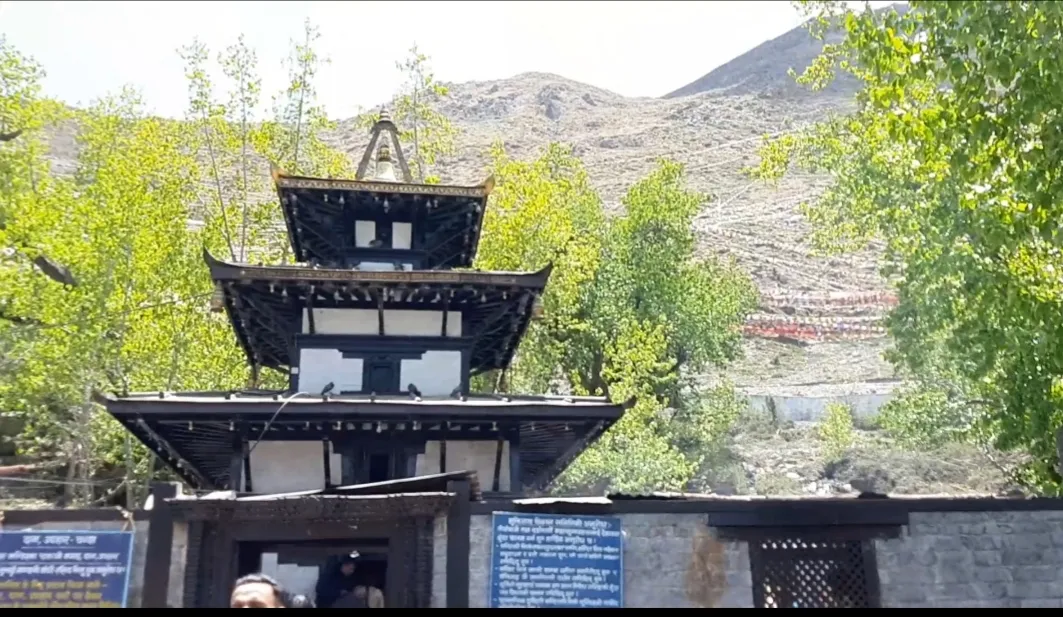
Muktinath helicopter yatra: 1-day tour from Kathmandu with the 108 sacred spouts, darshan and return by afternoon. Price, itinerary, elderly-friendly guide.
High in the Mustang region of north-central Nepal, at an altitude of 3,710 metres, lies one of the most extraordinary sacred sites in the Himalaya. Muktinath, known to Hindus as the place of liberation (mukti means salvation) and to Buddhists as Chumig Gyatsa (the Hundred Waters), is a temple complex where an eternal flame burns on water, where 108 ice-cold spouts pour sacred water in an unbroken stream, and where pilgrims have come for centuries to wash away the karma of a lifetime.
For most of its history, reaching Muktinath required days of trekking through the Kali Gandaki gorge — the world's deepest valley — or a hard overland journey by jeep on mountain roads. The helicopter pilgrimage changed that: today the temple is a single morning from Kathmandu or Pokhara, with a full circuit of the sacred complex completed comfortably and a return by afternoon. For elderly pilgrims, for families honouring a parent's lifelong wish, and for travellers who want the Mustang landscape without the Mustang trek, this flight is the answer.
The temple complex sits in a wind-swept valley behind the Annapurna range, at the northern edge of the Annapurna Conservation Area. Its fame rests on three phenomena that coexist nowhere else on Earth:
The 108 Muktidhara spouts — a wall of stone bull-head spouts pouring ice-cold spring water. Pilgrims walk the full wall, bathing beneath each spout in sequence; the water is snowmelt and the discipline of completing all 108 is the ritual's point.
The eternal flame — a small natural gas seep inside the temple that has burned continuously for as long as records exist, on the same rock where spring water emerges. The Hindu tradition names it Jwala Mai; Buddhist texts call the coexistence of fire and water one of the site's proofs of sanctity. Science explains the gas seep; standing in front of it, the explanation feels beside the point.
The Vishnu temple at the centre — the main shrine where the deity Vishnu (as Muktinath, Lord of Liberation) is worshipped, ringed by Buddhist prayer flags and chortens. The site is genuinely shared: Hindu pandits and Buddhist lamas conduct rituals in the same complex, and the pilgrim streams — Indian and Nepali Hindus alongside Tibetan Buddhists — mix in the same courtyard.
The helipad sits beside Ranipauwa, the village that serves the temple — a cluster of lodges, shops selling ritual items, and the inevitable tea houses. The Kali Gandaki river runs below the temple: the same valley that trekkers know as the deepest gorge on Earth, flanked by Dhaulagiri (8,167 m) and the Annapurna massif. Look for the black stones the river is famous for — saligram, fossilised ammonites sacred to Vishnu, found only in this valley. The local trade in them is centuries old.
To the north, the trail the helicopter replaces continues into Upper Mustang — the restricted former kingdom of Lo that requires its own permits. The view from the temple valley toward the Tibetan frontier plateau is the geography of the entire pilgrimage: you stand at the boundary between the Hindu middle hills and the Buddhist high desert.
Before helicopter service, the standard pilgrimage was a 3-4 day jeep-and-trek circuit from Pokhara: two days of mountain road, the Jomsom flight's weather lottery, and a final hike up from Ranipauwa's trailhead. Elderly parents who dreamed of Muktinath their whole lives could simply not make it. The flight made three things true at once: the pilgrimage became a day trip, the altitude exposure dropped from four nights above 2,700 m to about 45 minutes at 3,710 m, and the temple became reachable for the pilgrims who wanted it most — the old, the frail, and the time-poor.
We have flown Muktinath parents in their eighties, wheelchair-bound pilgrims carried the last twenty metres, and families of three generations completing a grandfather's vow. No other tour we operate carries this weight of meaning; it is the one where the thank-you messages mention prayers, not photos.
05:30-06:00 — Kathmandu hotel pickup, transfer to the domestic terminal. Weights and passport check, safety briefing.
06:30-07:00 — Wheels up. The route west-northwest crosses the Trishuli river's valleys, climbs over the ridgelines toward Pokhara, and the Annapurna range assembles itself on the horizon as a single white wall. Roughly 75-90 minutes direct to Muktinath depending on routing and winds.
08:15-09:00 — Landing at Ranipauwa helipad (3,710 m). Short walk (10 minutes) or jeep shuttle to the temple gate. Ground support stays with the group; oxygen is on the aircraft.
09:00-10:30 — The temple circuit. The standard ritual sequence: the 108 spouts (as many as your body allows — there is no shame in a partial circuit, and our guides say so plainly), darshan at the Vishnu temple, the eternal flame, and the surrounding Buddhist shrines. A Hindu priest can be arranged for a proper puja with advance notice; Buddhist pilgrims are introduced to the Chumig Gyatsa ritual by the site's lamas.
10:30-11:00 — Light refreshment at Ranipauwa, board the aircraft. The return leg crosses the Kali Gandaki gorge with Dhaulagiri close on the left — a photography window the ground pilgrimage never gets.
13:00-14:00 — Kathmandu arrival, hotel drop. Total day: about 8 hours door to door.
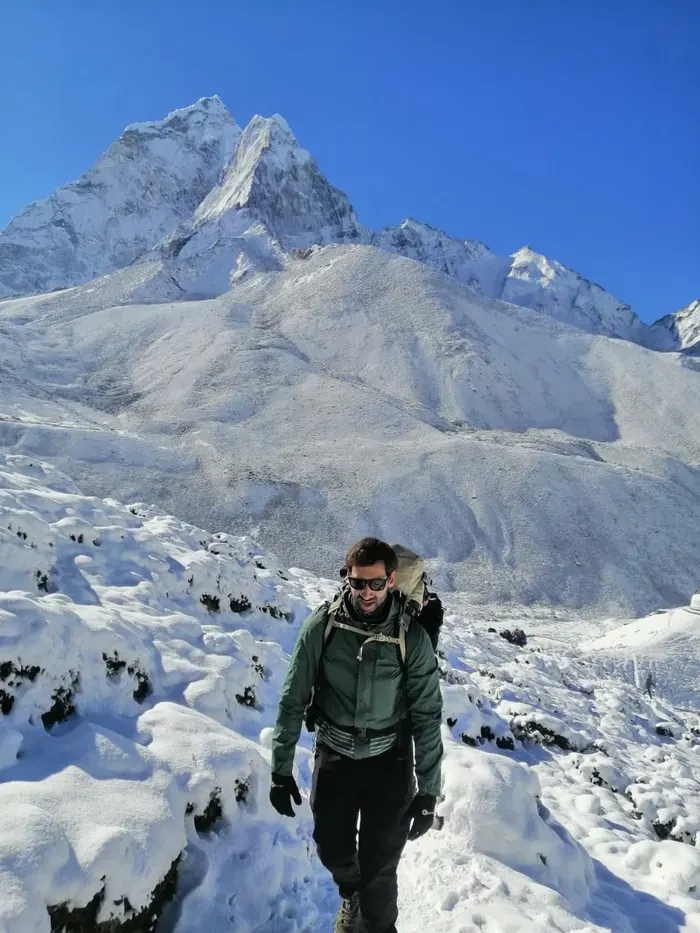
Muktinath's altitude (3,710 m) is the same band as Namche Bazaar, where trekkers acclimatise. The flight profile manages it three ways: exposure is about 45-60 minutes at the site, there is no sleeping high, and oxygen is carried on the aircraft. In a decade of operations the honest rules are: anyone with serious cardiac or respiratory conditions gets a doctor's clearance first; pilgrims with knee or mobility limits fly happily (the walk from helipad to temple is the only required walking, and jeeps shorten even that); and advanced age is not a barrier — we board seniors first, walk slowly as the group needs, and the temple staff are used to elderly pilgrims.
The tour price covers the flight, temple circuit with guide, ground transfers at Muktinath, and the standard offerings. What it does not cover: personal ritual offerings you buy at the site (puja samagri shops are at the gate), any special priest arrangements beyond the standard darshan, meals beyond the Ranipauwa refreshment, and personal travel insurance. For Indian passport holders, the Indo-Nepal arrangements make the journey simple — INR is accepted widely at the temple, and our team includes Hindi-speaking staff.
The flight year has two peaks. The September-November post-monsoon window: clear air, the festival calendar, and the busiest pilgrimage traffic — book early for Dashain and Tihar windows. The April-June spring: warmer and quieter, with the snow line still low and the spouts at their fullest from snowmelt. Winter (December-February) is the photographer's secret: the valley at its clearest and the crowds gone, but with real cold (-10°C at the site) and occasional fog windows in the gorge. The monsoon (July-September) brings the flight's hardest months — cloud in the gorge, occasional rain at the site, and the highest rebooking rate of the year. Jomsom's famous wind — the daily afternoon gale that runs up the Kali Gandaki — is why every Muktinath flight is a morning flight.
Every Muktinath flight is a morning flight — the Kali Gandaki gorge develops its famous afternoon wind most days, so departures are 06:00-06:30 and the site is reached before the wind arrives. Altitude: the site is 3,710 m with about 45-60 minutes of exposure; no sleeping high, oxygen on board, no acclimatisation required for the flight profile. Elderly pilgrims fly regularly — board-first seating, slow walking pace, and a jeep shuttle from helipad to gate for anyone who needs it. The 108 spouts: completing all 108 is the full ritual, but a partial circuit under as many spouts as comfortable is fully accepted — our guides will tell you the same. The water is snowmelt; keep dry clothes in your day bag for after the bath. Dress: layers (Kathmandu 15-25°C vs -5 to 5°C at the site), and shoulders/knees covered inside the temple — standard pilgrimage dress. Shoes come off at the main shrine; carry socks. Documents: passport at check-in. Indian citizens: INR widely accepted at the temple, Hindi-speaking staff on our team. Health gates: doctor's clearance for serious cardiac or respiratory conditions; not suitable for late pregnancy. A severe cold on flight day is a genuine rebook — sinus pressure at 3,700 m is painful. Weather policy: the gorge sets the schedule. Weather cancellations get full refund or free rebooking, always. Buffer mornings matter most for this tour — book it early in your stay, not your last morning.