
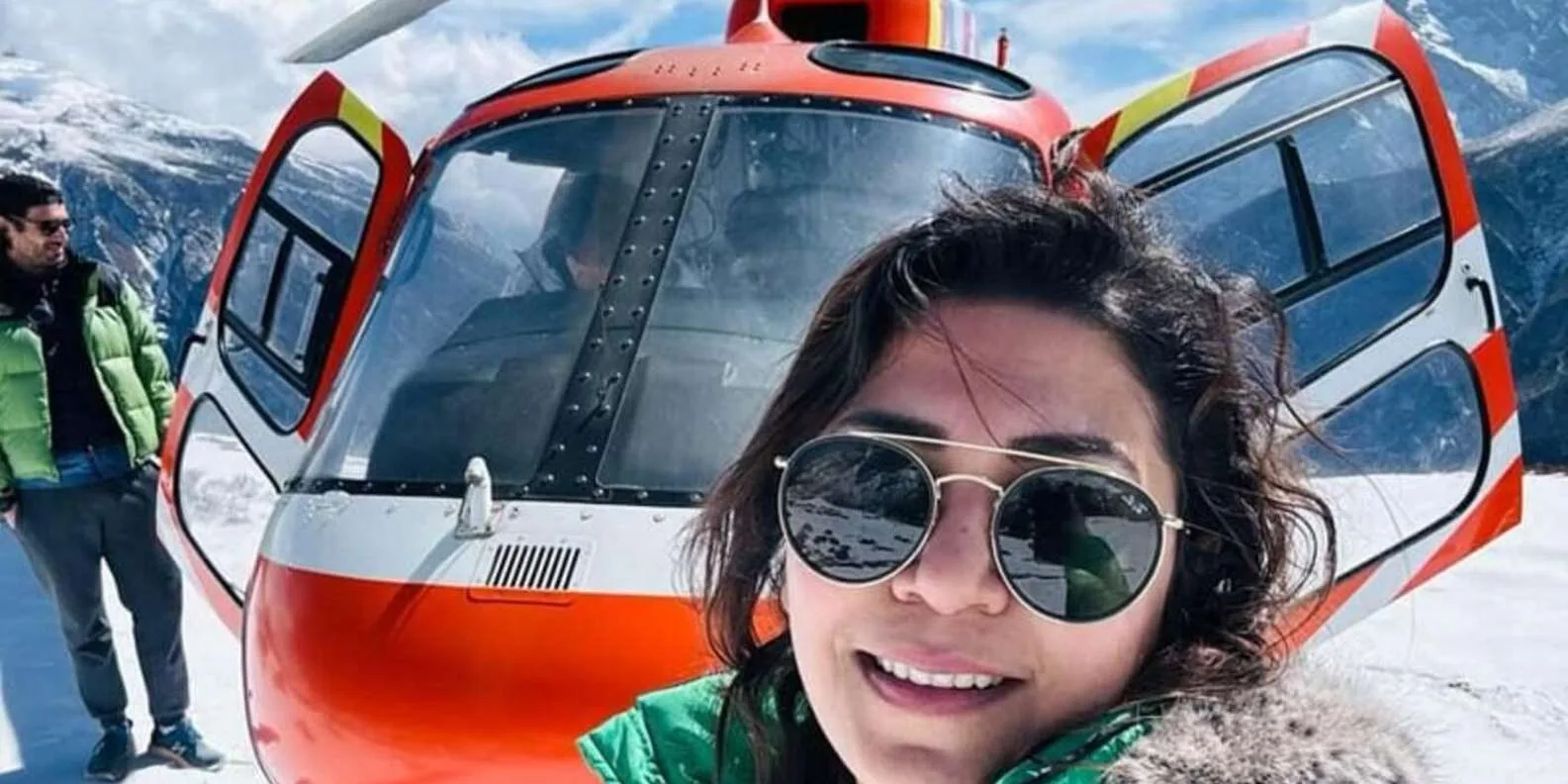
Everest helicopter tour with landing at Kala Patthar or Everest Base Camp, breakfast at Everest View Hotel. Full day tour from Kathmandu — price, itinerary, safety.
Everest Base Camp Helicopter Day Tour — Stand at the Foot of Everest in a Single Morning
The Everest Base Camp Helicopter Day Tour is the fastest, most comfortable way to experience the world's highest mountain. Instead of committing to a two-week trek, you fly from Kathmandu straight into the heart of the Khumbu, land at Kala Patthar or Everest Base Camp, and enjoy breakfast at the legendary Everest View Hotel — all before lunch.
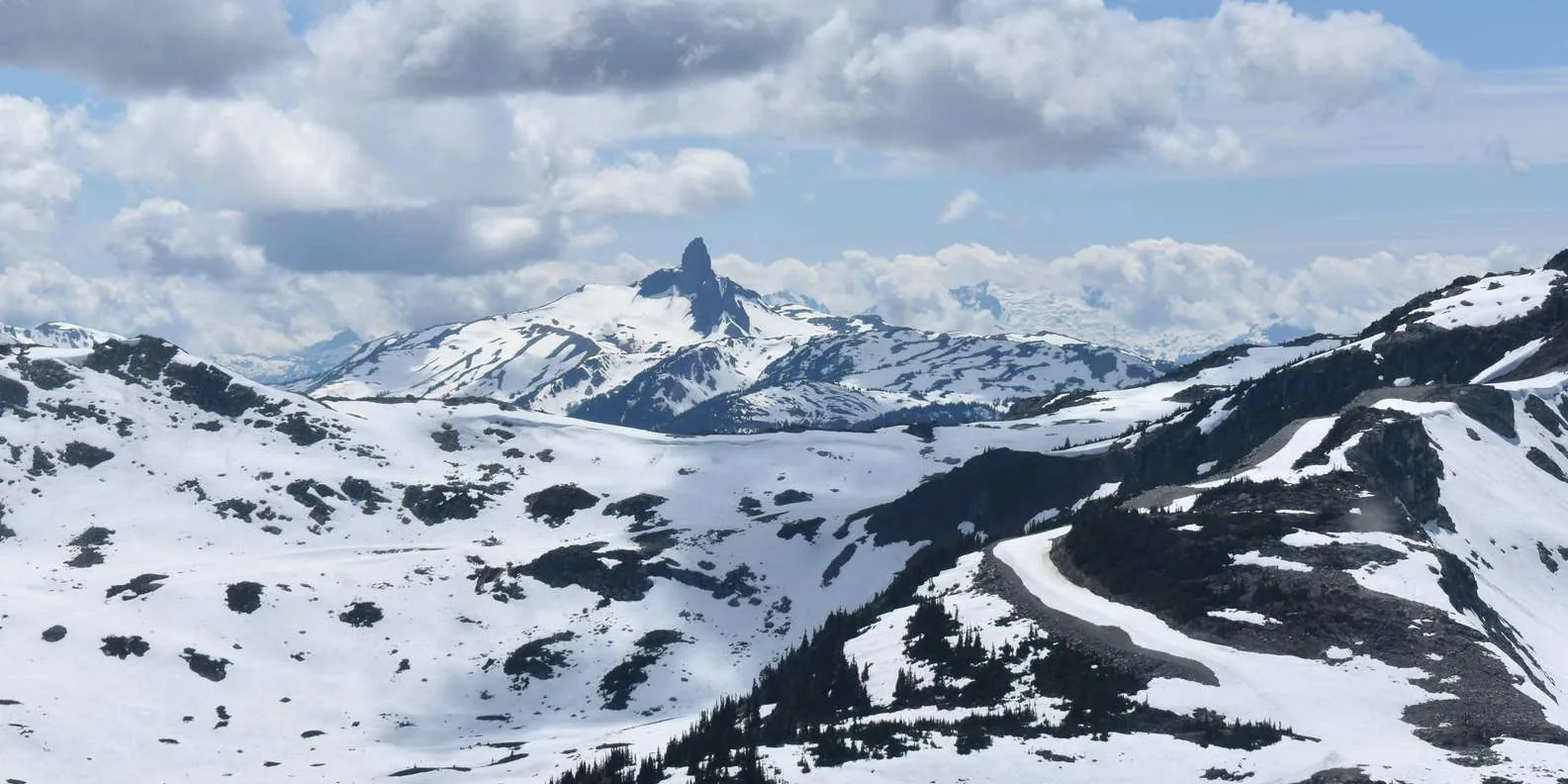
Your journey begins with an early-morning pickup from your Kathmandu hotel and a scenic helicopter flight over lush valleys, alpine forests, and remote Sherpa villages. After a brief refueling stop at Lukla, you continue past Namche Bazaar and Tengboche Monastery, flying close to the Khumbu Glacier with Everest, Lhotse, Nuptse, and Ama Dablam filling the windows.
The highlight is a guaranteed landing at Kala Patthar (5,545m) or Everest Base Camp (5,364m), where you step out for photos with the summit directly ahead. You then descend to the Everest View Hotel (3,880m) — one of the highest-altitude hotels on Earth — for a freshly prepared breakfast with a direct view of Mount Everest.
This tour is ideal for travelers with limited time, families, seniors, or anyone seeking a safe, comfortable, and luxurious alternative to trekking. Whether you're chasing a bucket-list adventure or iconic mountain views, it offers an unmatched way to experience the Everest region in a single day.
Not everyone can trek to Everest Base Camp — and not everyone wants to. The classic trek demands 12-14 days, strong knees, altitude acclimatisation, and a fitness base that rules out many travellers permanently. Parents want to show their children Everest without risking AMS in a teahouse at 4,000m. Executives have a four-day window in Kathmandu. Elderly travellers have the dream but not the legs. Pilgrims want the mountain, not the march.
The helicopter day tour was built for exactly these people. Since we began operating it in 2012, we have flown three-generation families, honeymoon couples, retired schoolteachers, photographers chasing the aerial Khumbu, and trekkers who walked up years ago and now want to show their spouse what they saw. The product is the same: the full Everest theatre — EBC, Kala Patthar, the Khumbu Glacier, the Everest View Hotel — compressed into a single, safe, spectacular morning.
What actually matters about a "day tour to Everest": you reach genuinely extreme altitude (5,545m at Kala Patthar), you land on Himalayan soil, and you do it without a single night above Kathmandu's 1,400m. That combination — altitude, landing, comfort — is the entire value proposition, and every operational decision in this tour exists to deliver it safely.
Understanding the route makes the morning better — here is what happens after wheels-up from Kathmandu's domestic terminal:
06:30-07:00 — Kathmandu to the mountains. The Airbus H125 lifts from the TIA helipad and banks north-east. The first twenty minutes cross the middle hills — terraced slopes, the Sun Koshi river valleys, and then the air thins into alpine country as the Langtang range slides past the left windows.
07:20 — Lukla refuelling stop. Landing at the Tenzing-Hillary Airport helipad (2,860m) for fuel. The strip itself is the famous 527-metre sloped runway — you will see it from the air. Lukla is the gateway of the Khumbu and the last flat ground before base camp.
07:40 — The Khumbu corridor. Departing Lukla, the route climbs the Dudh Koshi valley past Phakding, Monjo and the Sagarmatha National Park gate, then rises toward Namche Bazaar (3,440m) — the Sherpa capital, its amphitheatre shape unmistakable from above. Tengboche Monastery (3,860m) follows, its ridge-top position and mani walls visible from the windows, then Pangboche and the treeline ends. From here the terrain turns glacial: the Khumbu Glacier appears as a grey river of ice, moraine walls, and the peaks stack up — Ama Dablam's perfect pyramid, Nuptse's long wall, Lhotse's shoulder.
08:00-08:15 — Kala Patthar landing (5,545m). The pilot sets down on the ridge of black rock opposite Everest's southwest face. Ten to fifteen minutes on the ground — photos with the summit pyramid directly ahead, the South Col visible, the tents of Everest Base Camp itself visible below on the glacier when in season. Supplemental oxygen is on board and the pilot manages ground time precisely.
08:30 — Everest View Hotel breakfast (3,880m). A short flight down to Syangboche and the Everest View Hotel — the highest-placed hotel in the world at the time it was built, with a panorama of Everest, Lhotse, Nuptse and Ama Dablam through the dining windows. A hot breakfast is served while the mountains do the work.
10:00-11:00 — Return to Kathmandu. Re-crossing the corridor with the light better for photography now, landing back at the domestic terminal by mid-morning to late morning depending on the day's slot. You are back in your Kathmandu hotel before most trekking groups have finished breakfast.
Kala Patthar or Everest Base Camp — Which Landing, and Why It Matters
Two landing options exist in the high Khumbu, and the choice is made on the morning itself by the pilot based on weather, snow conditions, and load:
Kala Patthar (5,545m) is the standard landing — a rocky ridge that is actually HIGHER than Everest Base Camp and directly opposite the summit's face. Photographers prefer it: the Everest south face fills the frame at eye level, and the sunrise light hits the summit pyramid first. It is the reliable high-altitude landing zone in the region.
Everest Base Camp itself (5,364m) sits on the Khumbu Glacier moraine — the legendary starting point of every summit climb, marked by the base camp tents and prayer flags during the spring and autumn climbing seasons. A landing there is possible when conditions allow; when it happens, you stand where every Everest expedition in history began. In the main climbing windows, the camp is alive with expedition teams.
Either way you get genuine Himalayan ground time at extreme altitude with Everest in view — that is the guarantee, and the pilot makes the best call on the day.
The breakfast stop is not filler — for many travellers it becomes the memory of the day. The hotel sits at 3,880m on the Syangboche ridge above Namche, purpose-built in 1971 by a Japanese team with one design brief: every table faces Everest. The dining room delivers — Everest, Lhotse, Nuptse and Ama Dablam fill the window wall. The kitchen serves a full hot breakfast: eggs, Tibetan bread, porridge, coffee grown in Nepal's eastern hills. The price (about NPR 4,600) is not included in the tour — it is paid directly, and worth every rupee of it.
This is the question every thoughtful traveller asks, so here is the full, honest answer.
The physics of your exposure: altitude sickness (AMS) develops with time-at-altitude, not altitude alone. The tour's flight profile is deliberately engineered around this: you spend ten to fifteen minutes at 5,545m — well below the 6+ hours at which AMS typically develops — and you never sleep high. Your body simply does not have time to develop the condition during the tour's ground stops.
The equipment: every flight carries supplemental oxygen, pilots are CAAN-certified high-altitude specialists with thousands of mountain hours, and the H125 is the type that has landed on Everest's summit itself. Ground time at the high landing is actively managed by the pilot.
The honest caveats: anyone with serious cardiac or respiratory conditions, or who is pregnant, should talk to a doctor before booking — the same advice applies to a flight to any altitude. If you have a severe cold on the day, the sinus pressure at altitude is genuinely painful — we will rebook you for the next morning without penalty. And a small percentage of travellers feel mild dizziness at the landing; the protocol is simple — tell the crew, sit, breathe, oxygen. It passes.
Included: round-trip helicopter from Kathmandu, the guaranteed high landing, all flight-sector insurance and oxygen, hotel pickups and drops, government-permitted flight routes, ground support team, English/German/Spanish/French guiding.
The two genuine extras: the Sagarmatha National Park permit (NPR 7,000, ~USD 52, arranged for you in advance, price set by the park) and the Everest View Hotel breakfast (~NPR 4,600, paid at the hotel). We list these separately because honesty about costs is why our guests trust us — the total real cost of the day is the tour price plus roughly USD 90-100 for these two items.
Two ways to buy the same morning:
Shared seat (from $1,299): the standard product. You buy seats on a scheduled departure; the helicopter takes up to five; you share the morning with other travellers. This is the best value for couples and solo travellers.
Private charter (custom quote): the whole aircraft, your schedule, your routing preferences where weather allows, doors-on privacy for families and VIPs, and the flexibility to extend ground time at the pilot's discretion. Groups of four to five find the charter split competitive with the shared-seat price.
For: families with children old enough to fly, three-generation groups, elderly travellers with the Everest dream, photographers, time-poor executives, pilgrims, honeymooners, and trekkers' non-trekking spouses.
Choose differently: if you want to EARN base camp with your legs over two weeks, the trek is a different product entirely and the mountains reward the effort — see our EBC heli-trek if you want to walk up and fly back. If your budget is under $400 and the dream is just SEEING Everest, the Everest scenic mountain flight from $385 is the honest alternative. And if you have two days, the combination of scenic flight one morning and helicopter landing tour the next is the full Everest experience.
Three practical rules from a decade of operations:
Book the flight for early in your Kathmandu stay, never your final morning. Himalayan weather cancels helicopter mornings without appeal — the mountain sets the schedule, and a cancelled last-morning flight cannot be recovered. A buffer morning converts a cancellation from crisis to inconvenience.
The weather rule: morning is the flying window. Afternoon convection builds cloud in the high valleys and everything grounds. This is why pickups are at 06:00 — not our preference, but the mountain's.
Cancellation terms: weather cancellations receive a full refund or free rebooking to the next available morning — your choice, no penalty, no argument. It has been our policy since 2012.
Send us your travel dates, passenger count, and real body weights via the contact form, WhatsApp, or phone — we confirm the slot, the aircraft, and the price in writing within hours. We arrange the park permit in advance, your pickup time is confirmed the evening before, and the morning itself is ours to run. The flight operates daily in season (March-May, September-November) and on demand in the shoulder months.
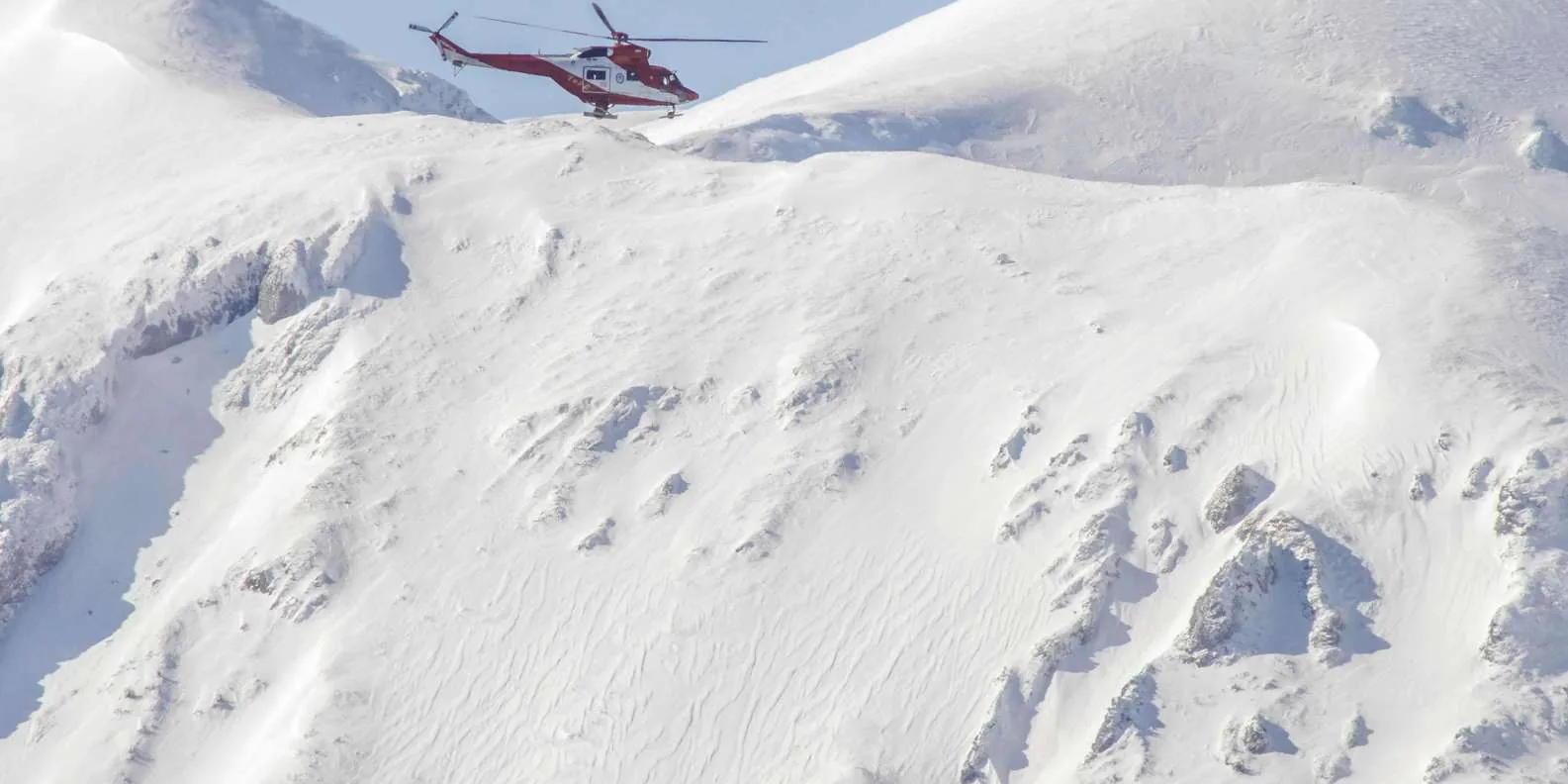
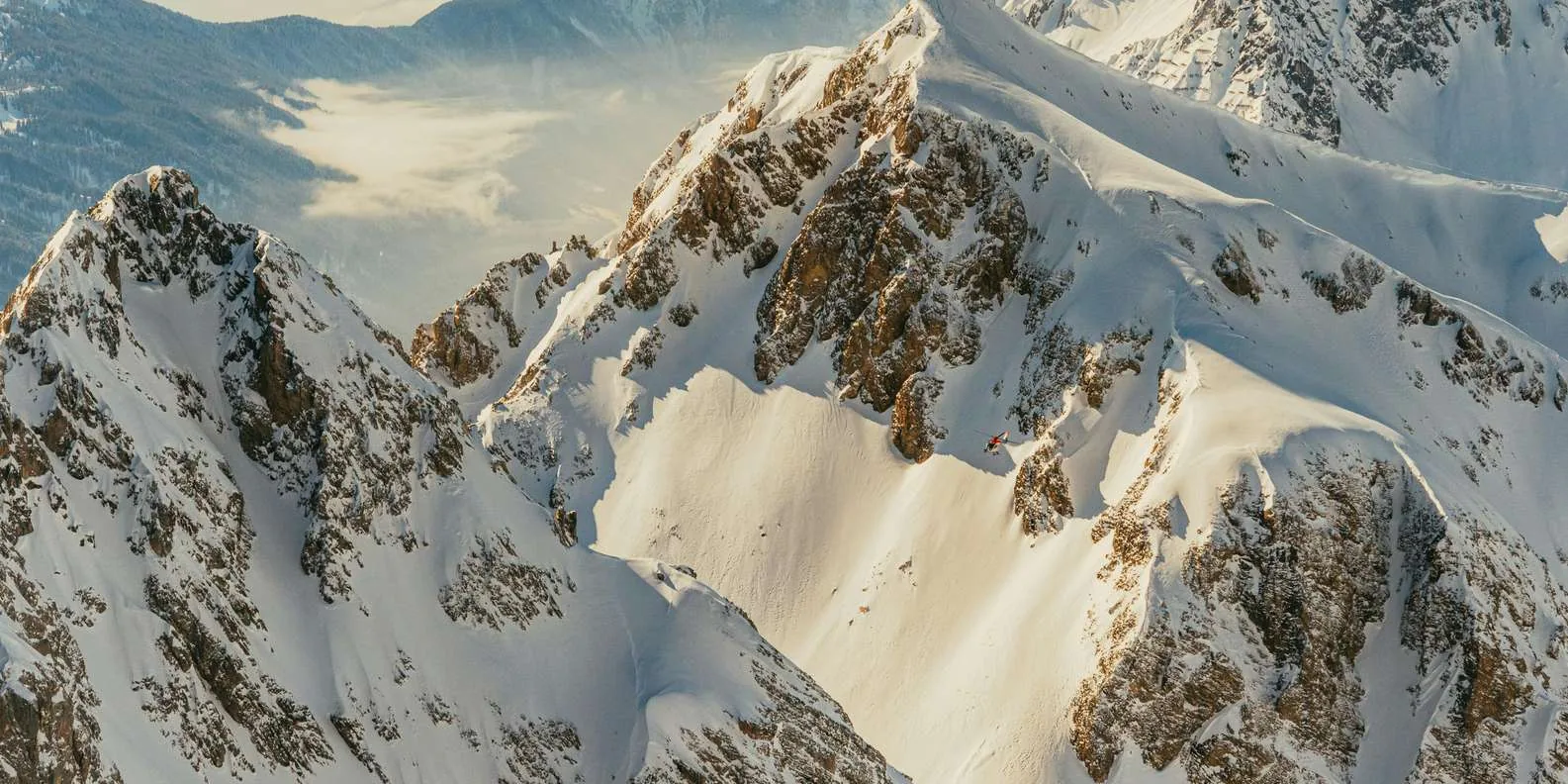
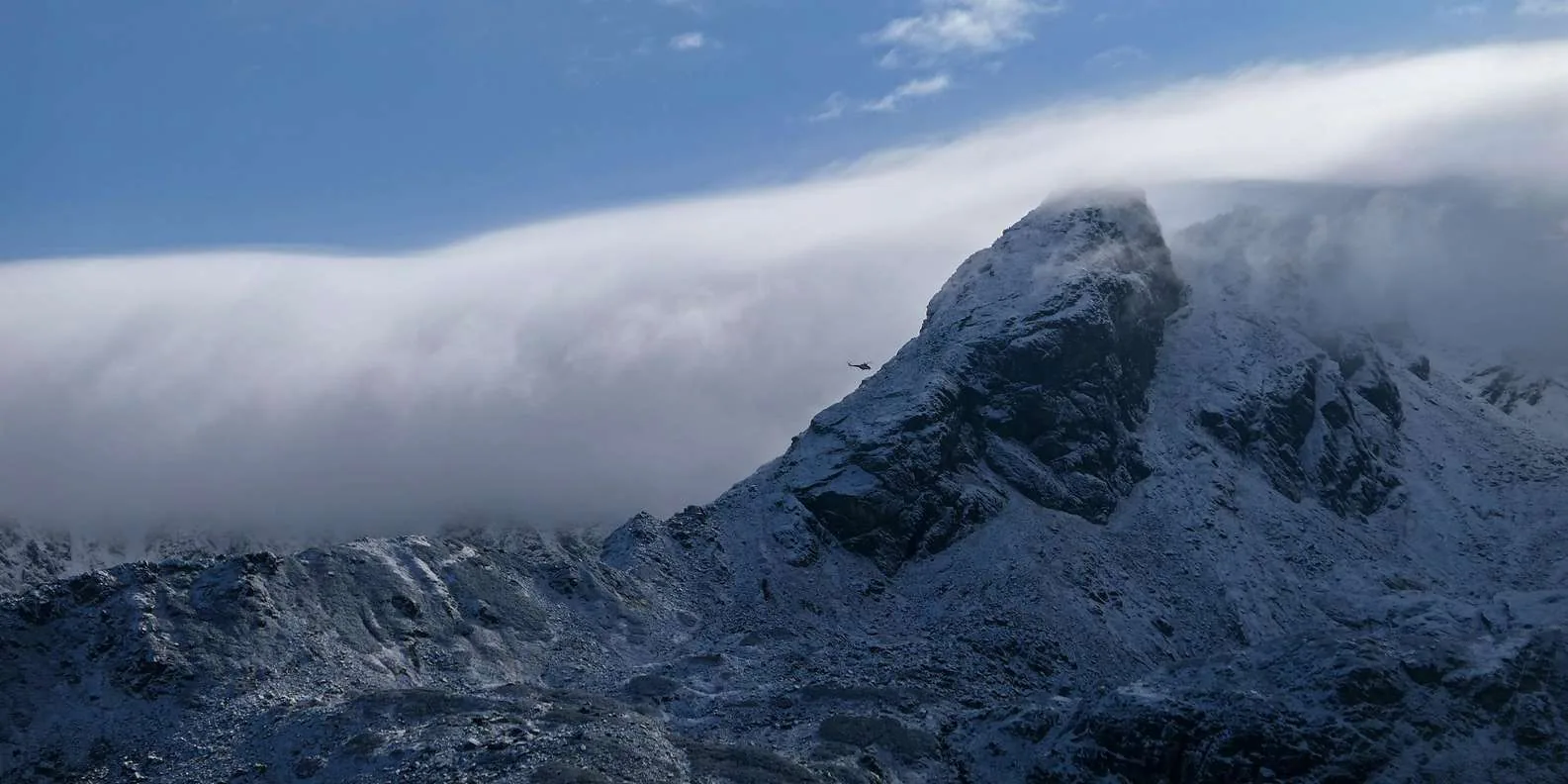
Helicopter tours are strictly weather-dependent — flights may be delayed or rescheduled for safety, so keep a buffer day in your itinerary. The landing site (Kala Patthar or Everest Base Camp) is confirmed on the day based on weather and aviation regulations. Altitude and health: you reach 5,545m but only for minutes, staying below the AMS development threshold; supplemental oxygen is carried on every flight. Not suitable for pregnant women or people with heart problems, mobility impairments, vertigo, respiratory issues, a severe cold on the day, or existing altitude sickness. Consult a doctor for any serious cardiac condition. A mild headache or dizziness at the landing is possible — tell the crew immediately, the protocol is sit, breathe, oxygen. Baggage: strict ~15 kg per person; day tours need no luggage — a small camera bag is ideal. Give real weights at booking; payload limits at 5,000m+ are physics, not policy. Photography: both window columns work (the aircraft banks both directions); a polarizer cuts window glare; burst mode beats single frames through moving glass; phone cameras handle the exposure well. Drones are prohibited. Documents: your passport (required at check-in), travel insurance with helicopter evacuation coverage is strongly recommended for any Nepal mountain travel. Money: the Everest View Hotel breakfast (~NPR 4,600) and Sagarmatha National Park permit (NPR 7,000, we arrange it) are paid directly. What to bring: warm layered clothing (Kathmandu 15-25°C vs -10 to 5°C at the landing), hat, gloves, sunglasses, sunscreen, closed shoes, camera, water bottle. Leave everything else at the hotel. Timing: hotel pickup 06:00-06:30; back in Kathmandu by late morning. Weather cancels mornings — the full-refund-or-free-rebooking policy applies, and booking early in your stay protects your schedule.